
CUSTOMER STORY
Daher x Tilkal
Turning a manual customs process into a 5-minute, audit-ready report

Daher, the French industrial and logistics group, worked with Tilkal to automate the traceability of raw materials — including conflict minerals — tracked under the EU Customs inward processing regime, replacing a slow, manual compliance process with one that produces auditable reports in minutes and pays for itself in under a year.
What's in the use case?
Background
The inward processing customs regime lets manufacturers import raw materials - including sensitive categories like conflict minerals - without paying duties upfront, provided they can prove exactly how those materials were consumed and where they ended up. That proof obligation is where most manual processes struggle: reconstructing raw material consumption across a complex industrial supply chain, batch by batch, well enough to satisfy Customs, historically meant days of manual reconciliation for every self-assessment report Daher had to produce.
Scope of the traceability initiative
The project covers all raw material batches tracked under Daher’s customs inward processing regime, from import through to end use in the supply chain, with Tilkal’s platform interfacing directly and automatically with Daher’s pre-existing SAP system rather than requiring a parallel data entry process.
Key success factors
- Automated interfacing with the existing SAP environment, so traceability data flowed from systems Daher’s teams already used, with no new manual data entry layer.
- Customs-regime-specific analysis algorithms, built around the particular reporting logic of the inward processing regime rather than generic traceability rules.
- Customized, shareable reports, designed to be sent directly to Customs and other relevant parties without additional formatting work.
- A fast, disciplined rollout: the solution was implemented in just 5 months.
Key outcomes
- 75% savings on customs duties for raw material batches tracked through the platform.
- Self-assessment report production time cut from 1 week to a few minutes: a step-change in how quickly Daher can respond to a Customs request.
- Return on investment in under a year, driven directly by the customs duty savings and the compliance-team time recovered.
- Demonstrable conflict-minerals traceability and full compliance with EU Customs regulations on raw material imports.
- 75% savings on customs duties for raw material batches tracked through the platform.
- Self-assessment report production time cut from 1 week to a few minutes: a step-change in how quickly Daher can respond to a Customs request.
- Return on investment in under a year, driven directly by the customs duty savings and the compliance-team time recovered.
- Demonstrable conflict-minerals traceability and full compliance with EU Customs regulations on raw material imports.
Daher’s project is a clear example of what our Supply Chain Data Hub delivers beyond a single use case: the same raw-material consumption data built for customs compliance can be reused for due diligence, risk analysis, or a future Digital Product Passport, without starting from scratch.
Want to go further? Discover more traceability resources!
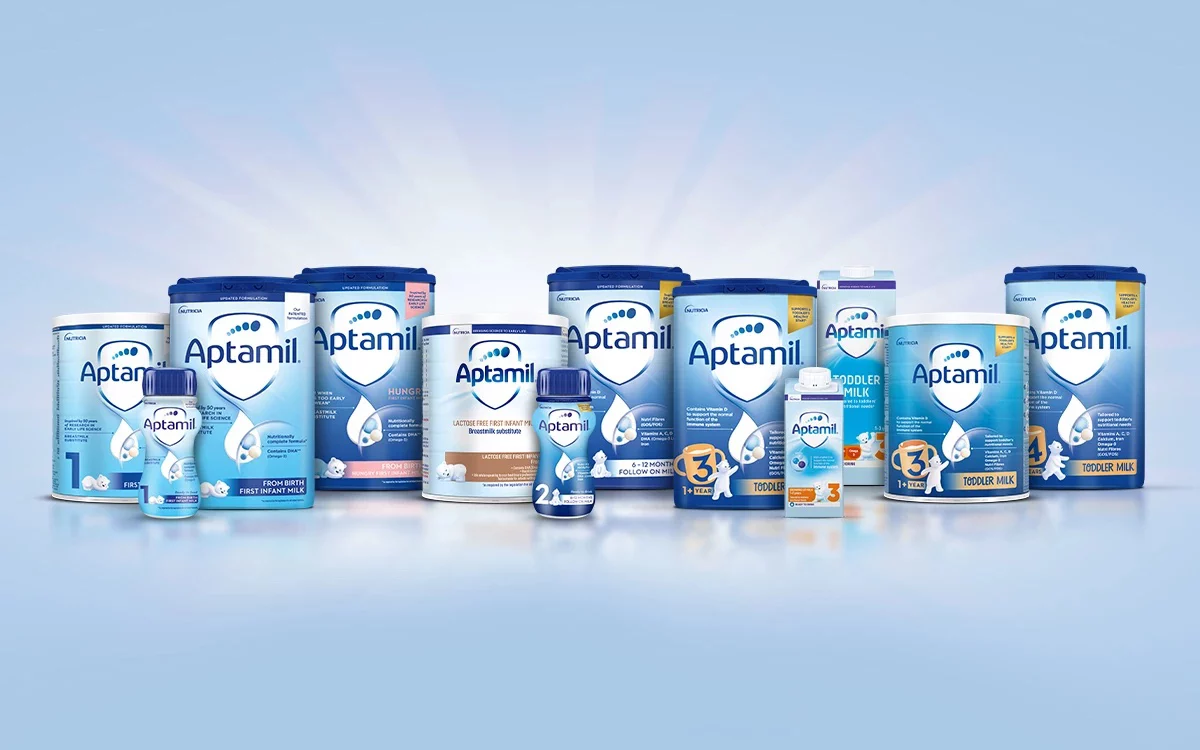
Danone: Bringing secure downstream traceability to infant formula in China
To make its 'One Planet, One Health' vision a reality and contribute to creating sustainable and profitable value for all its stakeholders over the long term, Danone has chosen to focus on innovation by relying on Tilkal's blockchain solution in order to consolidate its traceability and to gain visibility and transparency in its supply chain.
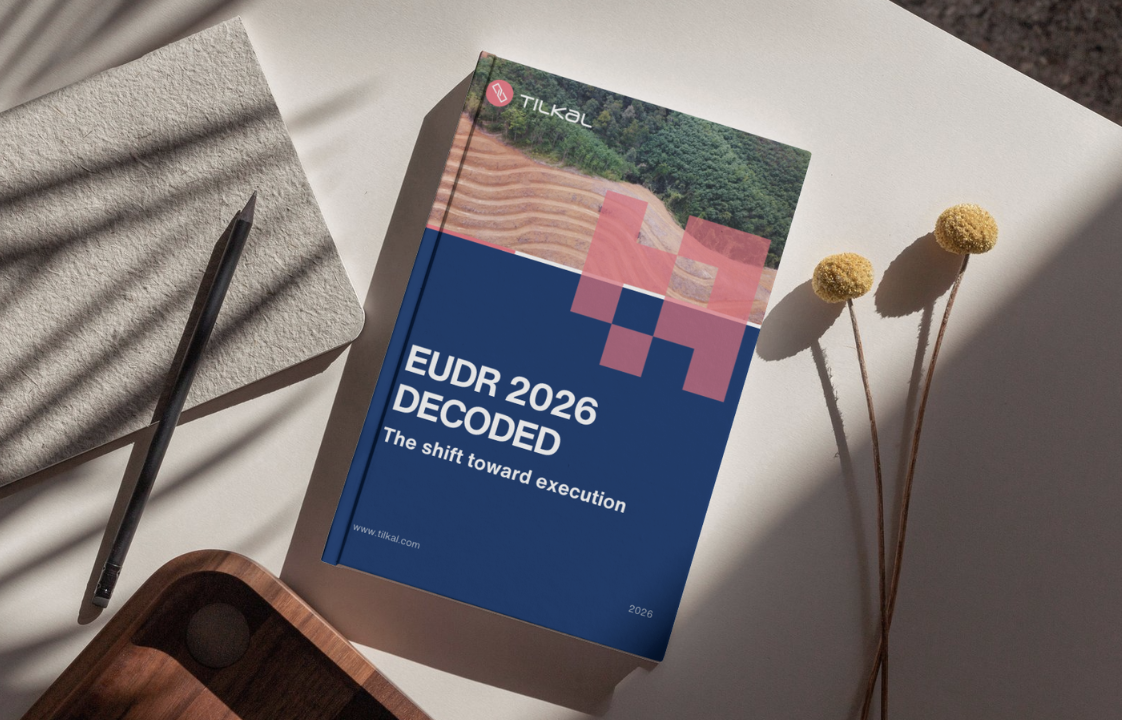
Executive Guide - EUDR 2026 Decoded, The shift toward execution
Built for procurement, compliance, ESG, traceability, and supply chain leaders, the document breaks down the most important EUDR requirements and explains what they concretely imply from an operational perspective.